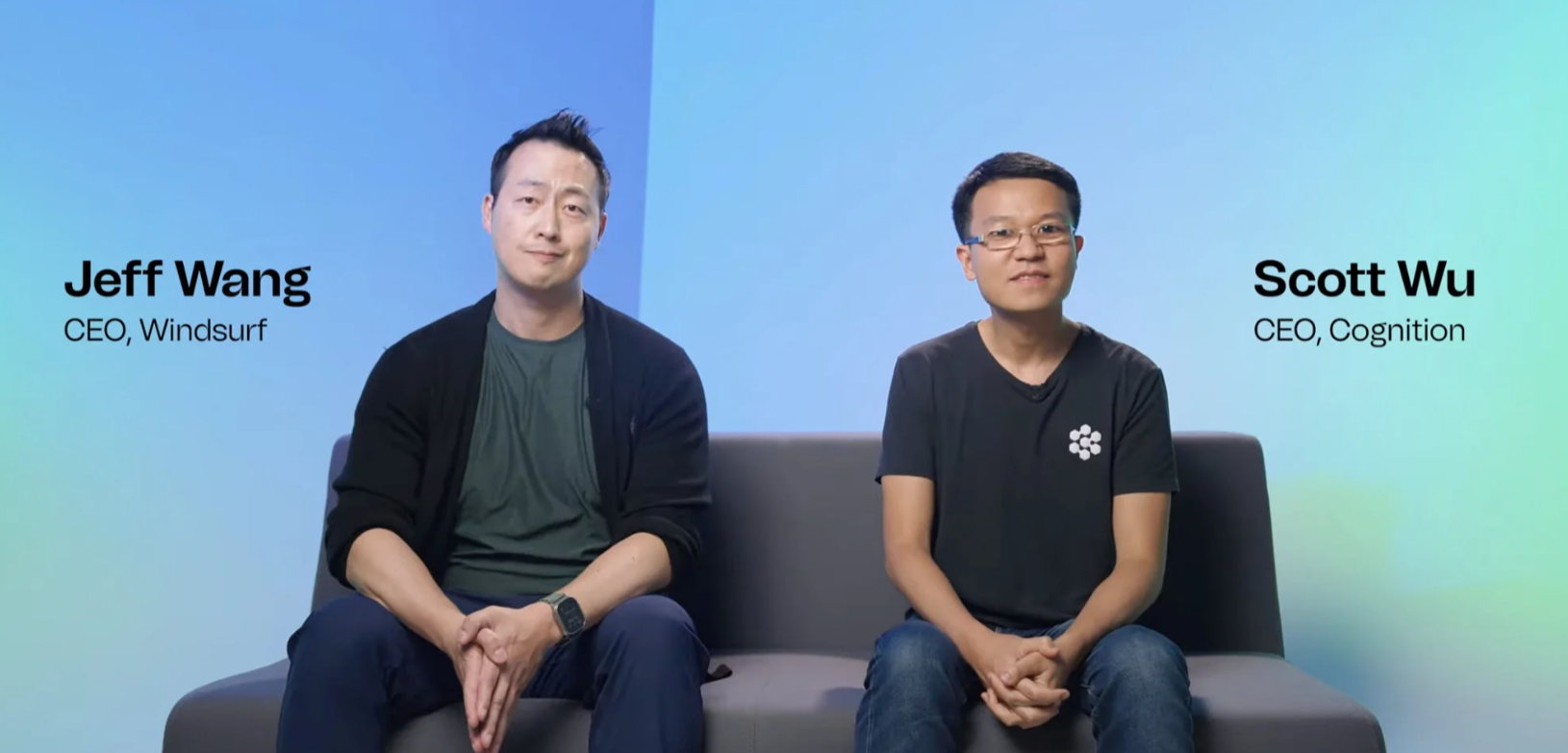
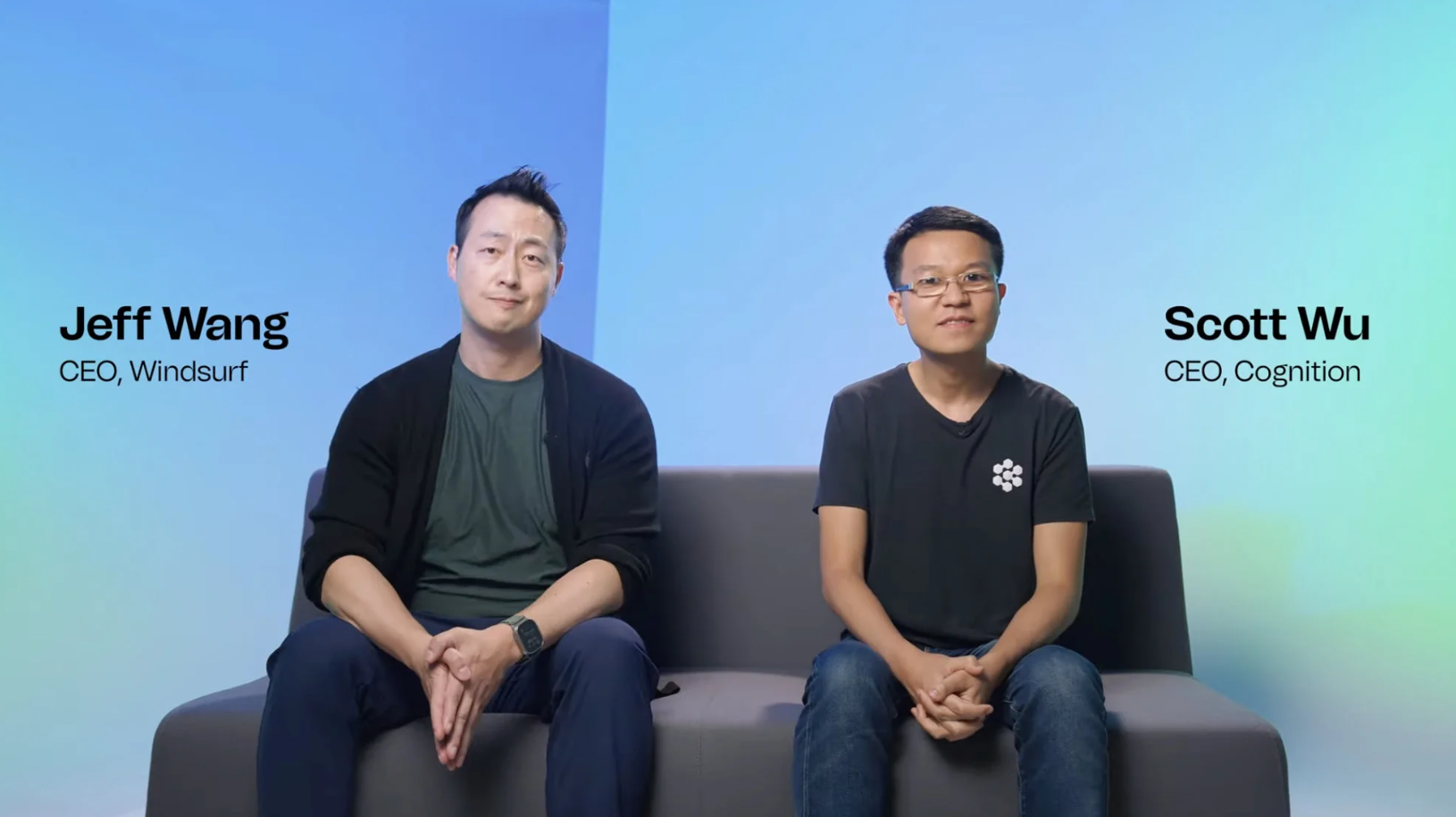
On Monday this week, an official blog announced the signing of a final agreement for the acquisition of the AI programming company Windsurf. Cognition AI reached an agreement with the Interim Chief Executive Officer of Windsurf, Jeff Wang, on weekends and, in the short term, the Windsurf team will continue its current operations.
Very dramaticly, just a few days ago, Google took out the CEO Varun Mohan of Windsurf, the co-founder Douglas Chen and the head of the research department, with a $2.4 billion “reverse acquisition” recruitment. As a result, the 250-person core team of the original company almost collapsed. At the time the Google deal was concluded, the $3 billion acquisition offer made by Openai against Windsurf was about a few hours ago, which cleared the way for Windsurf to explore other ways.
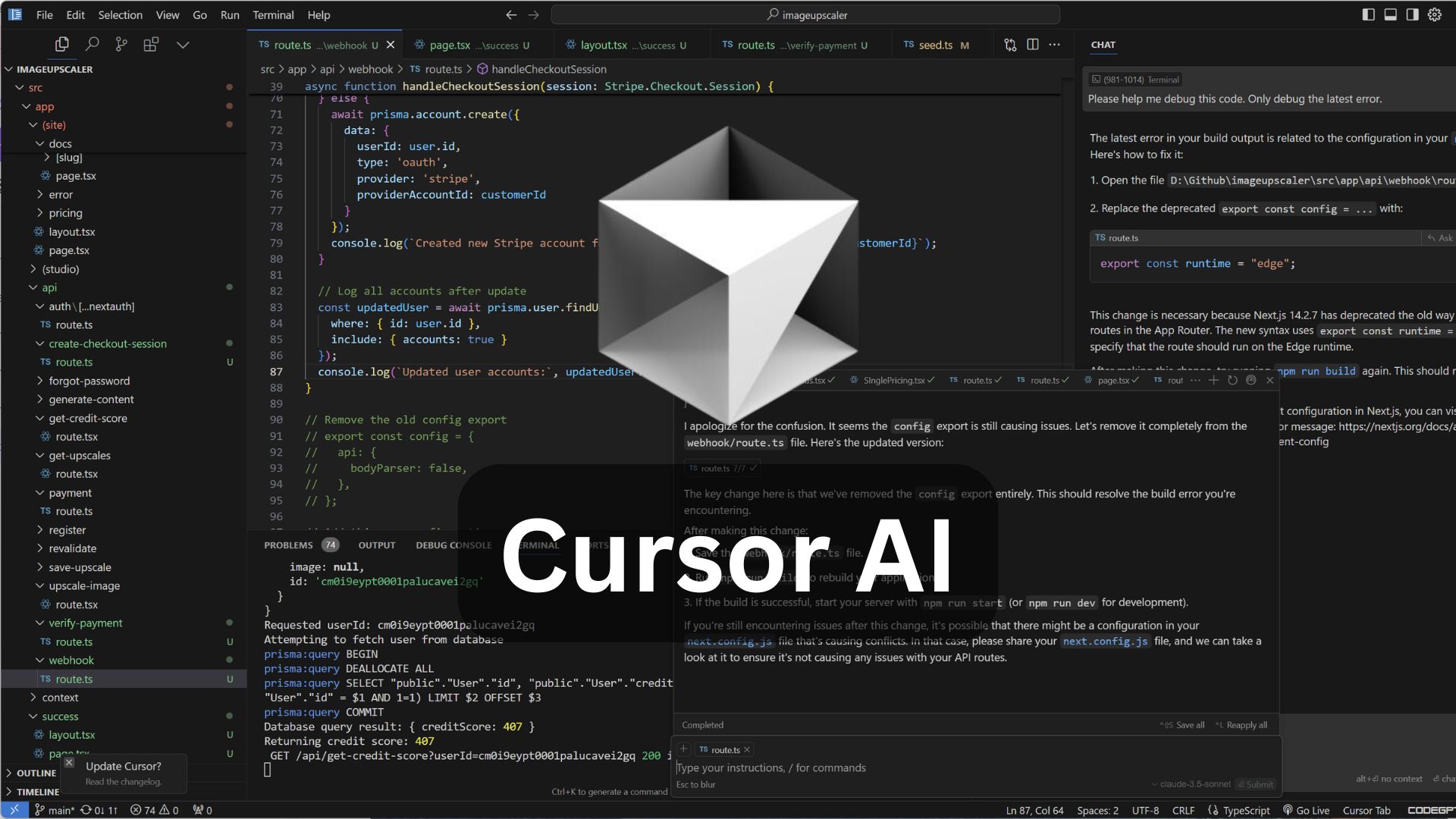
The competition around Windsurf marked a new culmination in the AI programming tool development competition, with a particular focus on the AI-driven Integrated Development Environment (IDE) represented by Cursor and Windsurf. In recent months, the AI-driven IDE business has grown dramatically, driving Cursor ‘ s annualized recurrent income (ARR) to $500 million. While Windsurf ‘ s operations were smaller than Cursor ‘ s, their growth over the past year had been strong, attracting interest from large technology companies.
“The last 72 hours have been one of the craziest hikings in my career.” The former manager of Windsurf, Jeff Wang of the temporary CEO, who was appointed after Google digs, wrote in English. “To Cognition’s new teammates: The Windsurf team is very fortunate to be part of a team that shares our vision, is equally deeply committed to service users and, above all, is consistent with values.”
Cognition stated that the acquisition would take over Windsurf ‘ s intellectual property and products, as well as all employees not employed by Google. Cognition did not disclose the purchase price, but the disclosed ARR of Windsurf amounted to US$ 82 million, of which the enterprise-class ARR ratio doubled. Cognition states that Windsurf’s user base includes at least 350 business clients and hundreds of thousands of active users.
According to press releases issued by both sides, the Windsurf team will continue to develop its AI-driven Ide in a short period of time, while Cognition focuses on its AI becoming an assistant Devin. Ultimately, Cognition plans to integrate the intellectual property and technological capabilities of Windsurf into their own products.
In April, it was reported that Windsurf ‘ s ARR had once reached $100 million. However, Anthony, who provided the hot AI programming model, cut Windsurf ‘ s direct access to its Claude AI model in June. Jared Kaplan, co-founder of Anthropic, attributed this decision to rumours that his main rival, Openai, was about to acquire Windsurf. A number of Windsurf clients disclosed to the media that they had been affected by the incident and had turned to other platforms providing the Claude model, such as Cursor.
In its press release, Cognition stated, inter alia, that Windsurf would now regain full access to Claude AI.
Last weekend, The Information reported that the employees who joined Windsurf over the past year were not paid for this billion-dollar “reverse buy-in” in Google. This has led many social media users to ridicule the transaction, which appears to benefit primarily investors and leaders of start-up companies.
Russell Kaplan, President of Cognition, posted on platform X that the acquisition of Windsurf really took place last weekend, only a few hours after the Google deal was made public. He indicated that the first call between the parties took place after 5 p.m. on Friday and that the agreement had been signed on Monday morning.
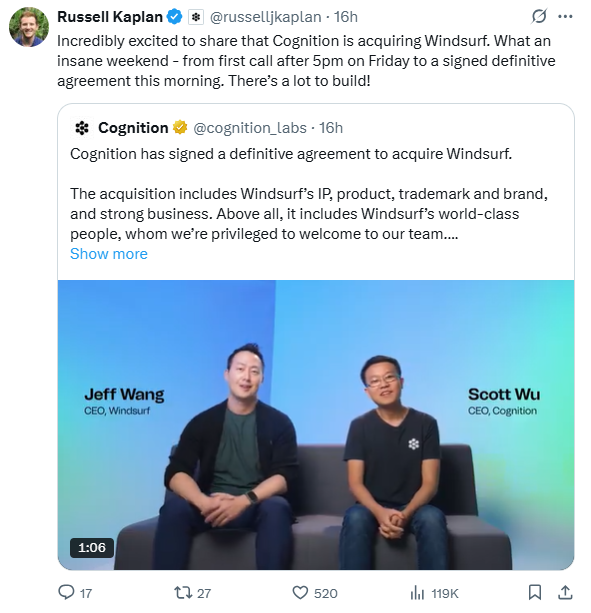
Cognition emphasized in the blog that 100 per cent of Windsurf employees would receive financial returns from the transaction and that the results of their work to date would reduce the attribution period.
By incorporating Windsurf ‘ s talent and intellectual property rights, Cognition may have gained an ever-greater team, able to counterbalance in the AI programming field with giants such as OpenAI, Anthropic and Cursor. In March this year, it was reported that Cognition was in the process of negotiating a valuation of $4 billion to finance hundreds of millions of dollars. It is not clear whether this round of financing will be completed, but Cognition may need such a “munition depot” to compete in the AI programming area.
Cognition was one of the first starters to launch mature AI as an assistant. Devin not only complements the mission, but is more committed to fully automating people like junior software engineers. This is a significantly bolder path than Cursor and Windsurf provide a supportive development environment that allows developers to use AI tools. However, early evaluations found that Devin could have made mistakes, which may indicate that his AI proxy technology was somewhat ahead of schedule.

But time has passed. In recent months, Cursor and Windsurf have begun to provide a much closer-to-agent AI product in a form that is moving towards Cognion products. In a recent interview, Cursor CEO Michael Truell stated that he believed that the AI reasoning model was sufficiently advanced to make programming assistants viable and expected that 20 per cent of the programming workflow would be handled by AI agents by 2026.
Today, Cognition has the dual ability to provide both AI programming assistants and AI-driven IDE, which may enhance its market value positioning. Earlier this week, Cognition also successfully signed Wall Street giant Goldman Sachs as an important client.
With the acquisition of Windsurf completed, Cognition appears to have become a more significant competitor in the AI programming area.