Fantasy Engine 6 was first released last month with a new generation of Rocket Alliances. Epic shared more details at the launch of the Fantasy Engine in Chicago on Wednesday. According to Epic, UE6 focuses on the way in which “innovators” developers publish and run games, rather than the way in which they are built.
“The way we develop UE6 is different from the way we develop UE4 and UE5. In the next two years, we will integrate the two major directions of the development of the Fantasia Engine — UE5 and Fortress Night — into one product: UE6. The statement reads:
“UE6 will continue to meet all the expectations of users for the Fantasia engine. Rendering will increase, compile time will be shortened, the iterative cycle will be tighter and the performance of the moving end will be enhanced. But UE6 is very different from the incremental UE5 development path because there are three aspects of game development that need to be changed simultaneously.”
According to Epic, the three main features of UE6 are the transition to the Verse game programming model, the portability and interoperability of content and code cross-playing, and the integration AI model.
Epic states that UE6 will introduce integration with AI models such as Claude, Gemini, which will serve as “creative and productivity multipliers” and enable teams “to focus on the creative and technical tasks necessary for development, rather than on time-consuming manual tasks”.
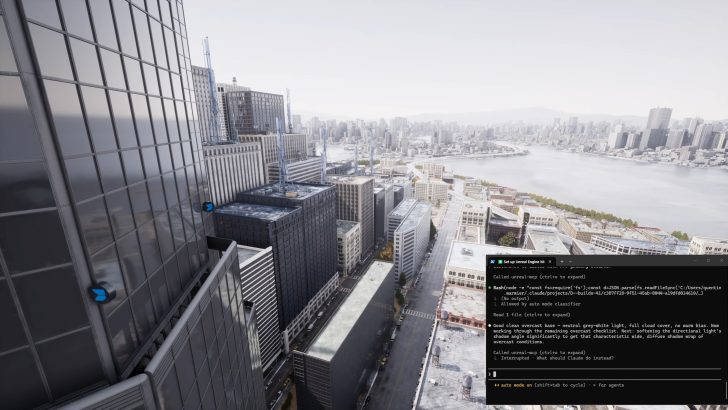
During the launch, Epic gave examples of tasks that developers might wish to use as an enabler, including “gauge setting, role binding, particle systems, skeletal weights and light adjustments”.
“The goal we set for UE6 is to significantly reduce the cumbersome work of creating content, to make more time available for creative exploration and to increase the number of iterative tasks that teams can do to sharpen content”, the statement says. “UE6 will be accompanied by a series of tools and workflows that you can choose your own preferred models, which have been field-tested in-house and UEFN.
In a live presentation, Epic showed how to create content by combining the AI Big Language Model directly with the Fantasia Engine. In the course of the demonstration, Epic used the Claude tip window to set up a virtual apartment by requesting items that were subsequently extracted from the pool.
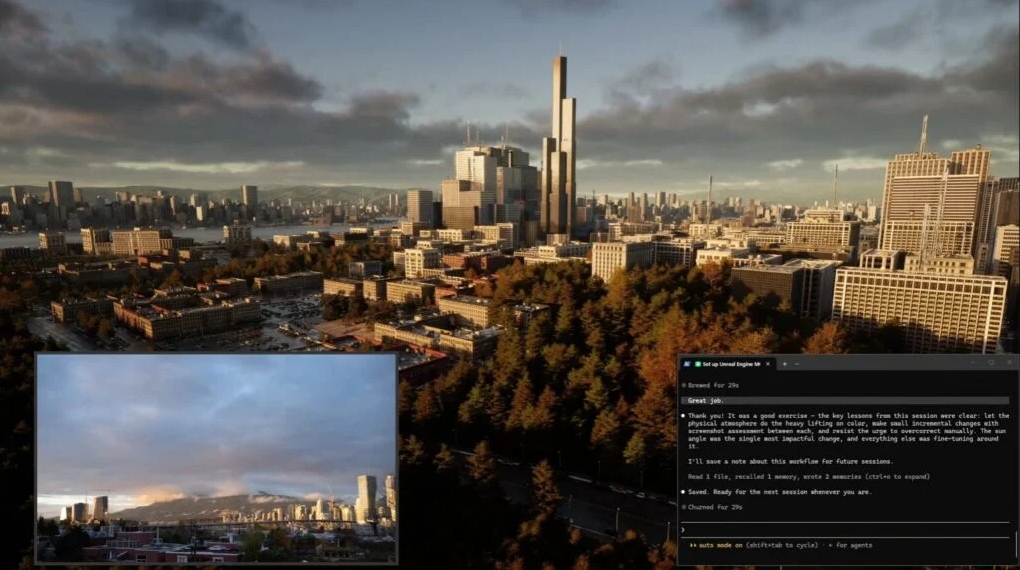
Epic then showed how to change care in the urban scene by requiring Claude to change time, even using static photographs as a reference. Epic emphasizes that the developer has ultimate control over its creation and can change the results manually.
Epic states that Fantasy Engine 6 will enter the pre-exposure phase by the end of 2027 and that the official version is scheduled to be released in about 12 to 18 months.
“UE6 will significantly change how the game is made. But it will not change the most important point, which is that it is the players — the game developers, the filmmakers, the members of our hallucinogenic engine family — that really make everything a reality. And thank you for making the Fantasy Engines work.”